Photo guide
Choosing a photo for a lithophane.
A clear face, gentle light, and a little breathing room. Here is how to choose a photograph that can translate well into light and shadow.
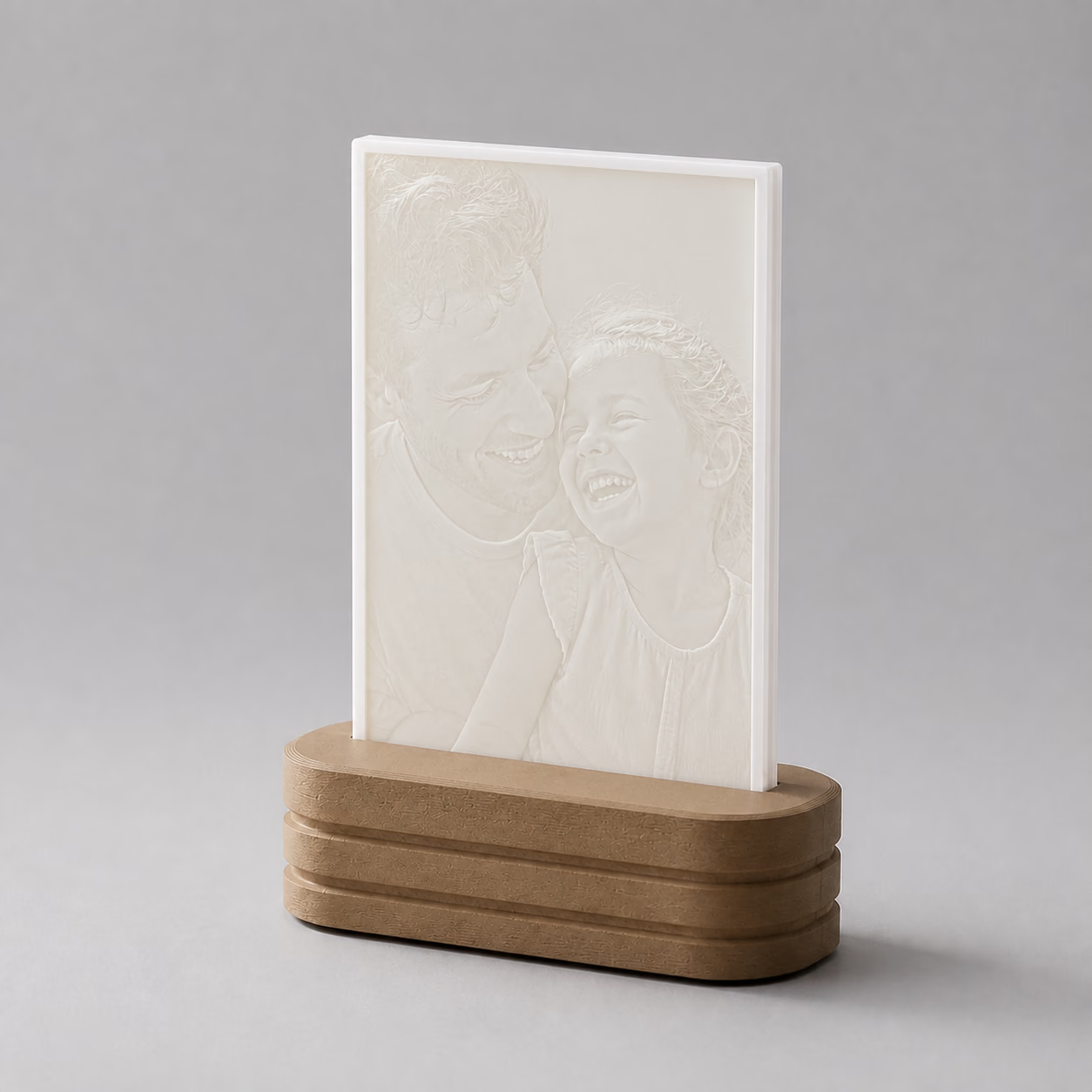
Think in light and shadow.
A lithophane turns a photograph into a relief with varying thickness. Light passes through thinner areas more easily, while thicker areas appear darker. Together, these differences reveal the image. It is a picture formed by transmitted light, rather than a colored photograph printed onto a surface.
Look for a photo where the important features are already easy to see. Strong color alone may not separate a subject from the background when the image is expressed in light and shadow.
Start with a clear original.
Choose the original photo from your camera or photo library when you have it. A screenshot, social media download, or repeatedly messaged copy may have lost detail. Zoom in on the eyes, hair, or fur: if they already look blurred or blocky, a lithophane cannot restore the missing information.
Even lighting helps keep faces visible. Watch for a bright window behind someone, deep shadow across a face, or highlights that have turned completely white. Raising brightness cannot recover detail that the original photo did not capture.
Leave room for the shape.
For an Orelume portrait plate, imagine a tall rectangle around your subject. The planned plate is 110 × 148 mm overall, with a visible portrait area of 106 × 138 mm. A wide group photo may need to lose people at the sides to fit that shape. Keep a little space around heads and other details you want to preserve.
A Nimelle Heart has a different outline. Keep faces away from the dip at the top, the pointed bottom, and the outside edges. One clear subject or a small group is easier to frame than a crowd of tiny faces. A simple background also helps the people or pet remain the focus.
A quick check on your own device.
Open a copy in your usual photo app and try these checks before choosing between a few favorite images. Keep the original file unchanged so you can return to it.
- Zoom in: can you see the facial details that make the person or pet recognizable?
- Try a portrait crop: does the whole important subject fit with room around the edges?
- For a heart, imagine the top dip and bottom point. Would either cut into a face or another detail you care about?
- Temporarily view the photo in black and white. Is the subject still distinct from the background? This is a useful check, rather than a simulation of the finished lithophane.
- Compare another photo if a face is blurred, very small, or lost in shadow. A different image may work better than heavy editing.
Consider how you will view it.
The Orelume Light pairs a portrait lithophane with an illuminated stand. The Nimelle Heart has no built-in light or battery; an external light source, such as a window or lamp, reveals its photograph. The light behind a lithophane affects how clearly its detail appears, so an unlit relief looks different from a lit image.
Explore the two pieces below to see which idea interests you. Orders and checkout remain closed while the collection takes shape.